
Drill selection options
Since our online store on construction tools constantly provides you with updated information, today we will not be an exception and will provide you with interesting information about the main parameters of choosing a drill, which will also simplify your choice.
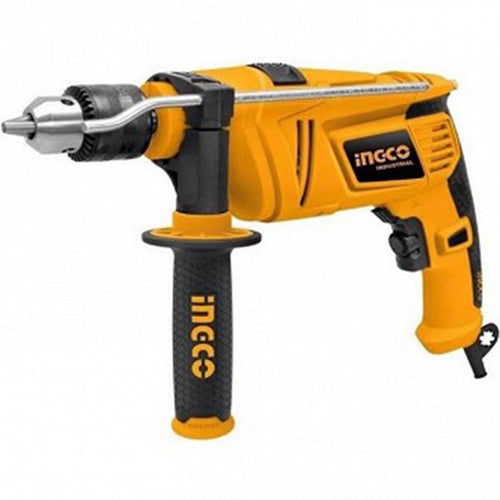
A drill is an essential tool for any handyman or just a right-handed person . The ability to hold and remove screws along with a drill makes it a very useful device. There are also impact versions. It is often not possible to buy a drill with such functions cheaply, but the price paid is definitely justified by the comfort received.
When describing any tool, we try to focus on the features that will help you choose the right tool for you. Therefore, keep an eye on our online store blogs, where we will discuss information about all the products that are available for purchase online.
Power
The speed of the tool and the quality of processing solid materials depend on the power rating, which can range from 230 to 2000 W. Keep in mind - the higher the engine power, the better and faster it will cope with the thickness of the material .
It is also important that you are able to grip the handle firmly while working so that you can perform tasks comfortably.
- For small jobs, a 400-watt drill is perfectly sufficient;
- 600-700 watt models are mainly used for repair work;
- 1000+ watt models are designed for large jobs, which are already used by professional builders in their work;
- Factories or enterprises that work with metal or stone materials use devices with a power of 1,500 to 2,000 watts.
Number of gears
Some materials, if drilled with a low-speed drill, will have a noticeable quality. Other types of drills can drill through the material so quickly that the holes are too deep.
Therefore, it is good when the device has different speed indicators for performing the same type of work. Therefore, 2-4-speed motors have been developed, where the user can pre-determine the speed that is acceptable to him for each position and change them during operation.
- The 2-speed tool is designed for those who constantly work on two different materials.
- 4-speed models are designed for drilling concrete, metal, wood and plastic.

Reverse movement
Some models have a lever that starts rotating in the opposite direction. This makes the drilling process easier when you want to remove the bolt from the hole. The reverse movement is especially convenient for those who Heavy or Has to work with materials of great thickness (for example, a wall of 500 mm, a metal plate of 20-30 mm).
Traffic light
When you start drilling into a material, it is essential to maintain accuracy, as you want to place the holes in the most accurate possible places. For this purpose, the drill body can be equipped with lights that will illuminate you. Workspace. This is especially useful in cases where your workspace is poorly lit.
Maximum drill diameter
When deciding to purchase a drill press , it is important to consider the fact that the capabilities and drilling diameters of each model are different.
This indicator also varies by material type, so before you buy, be sure to check whether the tool can perform the work you need:
- The maximum drilling capacity for brick can be from 10 to 82 mm;
- In home conditions, for plumbing installation, models with an indicator of 10-30 mm are sufficient;
- For ventilation holes, heating pipes and other works, indicators of 40-80 mm are provided;
- When working with metal, some drill diameter capabilities are limited to 6 mm, while others reach up to 32 mm in thickness;
- For drilling holes in wood, the drill can process holes from 9 to 70 mm. For example, installing locks requires creating a diameter of up to 30-40 mm.
We also offer another interesting blog from our online store about hand drills.

Cable length
All different models consume different amounts of electricity. To connect to the power source, cables are used, the length of which can be 1.5-4 meters.
- If the workflow is constantly carried out on the desktop, then the minimum size is sufficient;
- If you are repairing a car, you can buy a 2-2.5 meter long drill;
- During construction, it is better to use a cable that is 3-4 meters long, as it will provide more comfort when working at height.
Start button lock
When you place the drill in the right place and press the <Start> button, it will take a few minutes to process a small thickness of the material. After that, you release the button from your finger and move the drill to a new place. If you plan to make holes of greater depth in a hard material (metal 20-30 mm, brick wall 100-200 mm), then you will need at least about 10 minutes. If you plan to make a large number of holes, constantly pressing the button is very tiring. That is why manufacturers have begun to equip individual models with a Start button lock function.
Tool weight
The weight of the tool can range from 1 to 7 kg and depends on the type of work to be done.
- For installing supports under partitions and for plumbing work, it is best to use a 5-6 kg model;
- Those who work with ceramics and natural stone must adapt to the heavy weight of the tool and the strain on their hands;
- For working at height, it is better to purchase a lightweight, 1.5-2 kg model;
- For use at home or in the garage, a 2.5-3 kg drill is suitable.
Drill speed
In this case, the power of the tool is not measured in watts, but in the number of revolutions per minute. The higher this number, the greater the load on the device.
- In an enterprise, 1800 rpm is sufficient to complete 3-5 hour work tasks;
- If you constantly have to make holes in solid walls, then choose 2600 rpm models;
- For professional builders, models with 2000-3000 rpm are suitable.
Popular models

 კომერციული გარანტია 1 წელი


შესაძლოა დაგაინტერესოთ
-
How to choose a fan?
As soon as summer arrives, the first thing that comes to mind is a fan . Fresh air circulation in the heat, rapid coo...
-
How to choose power tools in 2025?
Modern construction and repair work is unthinkable without quality power tools. Choosing the right tool is essential ...
-
How to choose a robot vacuum cleaner?
The question of how to choose a robot vacuum cleaner has been relevant since the appearance of these smart devices on...
-
How to set the refrigerator temperature?
Setting the refrigerator temperature correctly is essential to ensure that products retain their nutritional value fo...
-
Air conditioner for 40 square meters - everything you need to know before buying
There are several important factors to consider when selecting the right air conditioner for a 40 m² room in 2025, en...
-

Intex or Bestway - which pool to choose?
When shopping for an outdoor framed pool, you've probably come across Bestway and Intex pools. Both brands offer a wi...
-

Overview of air conditioner features - what each one means
A modern air conditioner has many features, some of which are easy to guess by their names, but in advertising campai...
-
The most comprehensive review of DELONGHI coffee machines
DeLonghi is an Italian premium brand known for its high-quality home appliances, especially coffee machines . The com...
