
How to choose power tools in 2025?
Modern construction and repair work is unthinkable without quality power tools. Choosing the right tool is essential to achieving fast and safe results.
The online store Isurve.ge offers a wide selection of leading brands that are distinguished by high quality and reliability.
When choosing power tools, it is important to consider the requirements and intensity of a particular job. Choosing the right model determines the quality and comfort of work. In this article, we will introduce you in detail to popular power tools and practical tips for choosing them.
Table of contents
- Drill (electric drill)
- Grinder (angle grinder)
- Polishing tool (polishing machine/tool scraper)
- Screwdriver (cordless drill/driver)
- Perforator
- Welding machine (inverter “Swarka”)
- Kemper machine (automatic welding machine)
- Jigsaw (reciprocating saw)
- Milling cutter (electric router)
Introduction
Choosing the right power tools has become more important in 2025, as there is a very wide range and many brands on the market.
In Georgia, you can easily find tools from both leading world manufacturers and new, lesser-known brands.
In this article, we will discuss the main power tools and share practical advice when choosing them, as well as factors that both amateur users and professionals or industrial users should consider in order to choose the optimal and reliable tool for them.
The focus is on user education and awareness - we offer real data, recommendations based on practical experience, and examples of models available in Georgia (including product descriptions on isurve.ge). The article is not intended to be an advertisement; its goal is to help you make an informed and sensible choice of the device that best meets your needs.
Let's get to know each tool separately and discuss their types, brands, benefits of use for different users, and details to consider when choosing.

How to choose a drill (electric drill)?
A drill is one of the most common power tools used to drill into wood, metal, concrete, and other materials. Both standard and impact (hammer) drills and cordless drills are available in Georgia.
Types of drills
There are mainly two types of drills:
-
Corded drills - which operate on an electric mains and are characterized by high power, which allows for long-term operation.
-
Cordless drills - run on batteries (mostly modern lithium-ion batteries). These models provide mobility and convenient use in places without electrical wiring. Both types are popular in Georgia, although cordless models are more widespread globally.
Here is a visualization of the comparison of drill types:

Impact drills
Hammer drills are equipped with a special mechanism that makes it especially easy to drill holes in concrete, brick or other hard materials. There are also special drills with the SDS-plus and SDS-max systems , which are designed for professional and intensive use.
Popular brands in Georgia
Drills of world-famous brands are available in Georgia, such as Bosch , Makita, Dewalt, Hitachi (Hikoki). Also popular are quality budget brands such as Crown, Total, Yato, Baltika. Bosch and DeWalt.
The latter two are particularly distinguished by their high quality, while Crown and Total are more affordable and reliable in the Georgian market.
Who should choose a drill?
-
For amateur users (for simple tasks at home, e.g. assembling furniture, installing shelves), a standard 600-800 watt drill or a mid-priced cordless drill/driver is sufficient. Such models are offered by Crown, Ingco, Total for 70-150 GEL.
-
For professionals (for repair or other intensive work), powerful, durable 800+ watt models from Bosch, Makita, Dewalt are preferable. Features such as speed regulation, an additional handle, a strong metal gearbox and housing are also recommended, which prolongs the life of the tool.
-
The industrial and commercial segment requires special drills for heavy-duty work, including SDS-max rotary hammers, which are ideal for drilling large and deep holes.
To help you choose the type of drill bit based on the material, this graphic image will help you:

Factors to consider when choosing a drill:
-
Power (watts) - determines the type of material you can work with. Drills from 600 to 2200 watts are available in Georgia.
-
Impact function - needed for drilling hard materials.
-
Speed adjustment - provides flexibility when working on different materials.
-
Wireless or wired - determines freedom of movement and comfort of use.
-
Ergonomics and weight - important for comfort during long periods of work.
-
Accessories - A set of additional drill bits or a suitcase, which is useful, especially for amateur use.
In general, you should choose a drill according to this principle, depending on the work to be performed:

When choosing a drill, clearly determine where, how often, and on what materials you plan to use it. The right choice will ensure reliable and long-lasting operation of the tool.
After discussing the drills, you can return to the table of contents or continue reading about the Bulgars.

How to choose a grinder (angle grinder)?
A grinder (angle grinder ) is one of the most popular and versatile power tools, widely used for both construction and household work.
It allows you to easily and quickly cut, polish, straighten or clean metal, stone and other hard materials, which significantly saves time and effort.
There are several important factors to consider when choosing a grinder . They mainly differ in the size and power of the disc. Standard disc diameters are 115 mm, 125 mm, 150 mm, 180 mm and 230 mm.
Small (115-125 mm) models are compact and convenient for small jobs such as cleaning metal surfaces, cutting thin pipes, or small home repair tasks.
Larger (180-230 mm) circular saws are used for large-scale work, such as cutting concrete slabs, bricks, or thick metal structures.
Both mains (wired) and cordless (battery) balgarks are available in Georgia.
We think a visualization of the comparison of wireless (on the element) and wired balgarks with a 10-point system should be quite interesting:

Network models are characterized by high power, which is best for continuous and intensive use.
Battery-powered models provide freedom of movement, but they are relatively low-powered and have limited operating time.
Brands
There are many brands of angle grinders on the market. Experienced craftsmen mostly trust leading manufacturers such as Bosch , Makita , DeWalt , Metabo , etc. These models are relatively expensive, but they are distinguished by high-quality materials, powerful motors, and long service life.
More affordable brands are also popular: Crown , Total , Ingco , Stanley (some of which are produced by licensed factories of Makita or Bosch). Angle grinders of Crown, Bosch, Total, and other brands are freely available in Georgia, and their prices start at 70 GEL for medium-power models.

When choosing, pay attention to whether it comes with an official warranty - this is also an indicator of quality, as products from good brands have at least a 1-year warranty from the manufacturer.
Who benefits from what?
-
Amateur craftsman - at home, for small repairs or DIY projects, a small (115-125 mm disc) grinder is quite enough. A power of 600-800 watts will easily cut metal profiles, tiles, remove rust from metal, etc. Small models are lightweight and easy to handle, which makes it easier for beginners. Grinders of relatively inexpensive brands (Total, Ingco, Crown) are in demand in this segment and their quality is more than high enough for household use.
-
Professional craftsman - if you work with a grinder every day, give priority to a powerful (1000+ watts) and durable model. Bosch , Makita and DeWalt are highly recommended among professionals. Grinders with a particularly large (230 mm) disc, with a power of up to 2000 watts, will cope with heavy work. Models of the professional series have additional safety functions: soft start (voltage limitation when switching on, so that the motor does not start with a shock), overheating protection, additional handles that reduce vibration and a speed control function. These functions reduce worker fatigue and ensure long-term operation of the tool.
-
Industrial use - in industrial environments where the grinder is used continuously and under high loads (e.g. metal construction, factories), preference is often given to professional lines of top brands (Bosch series, Makita GA9070 heavy-duty grinders, etc.) or specialized heavy-duty machines. However, in most cases, it is advisable to have several high-class grinders in the industry - one for small-format detailed work and one for large, deep cuts.
Tips for choosing a balgark
When buying a baler, consider the following key features:
-
Power (watts) - Determines cutting ability. More wattage means easier cutting of thick and hard materials, while maintaining the ability to work for a long time. However, a more powerful motor also increases the weight of the tool.
-
Rotational speed (rpm) - Standard angle grinders have a rotation speed of 10-12 thousand rpm. Higher RPM provides a cleaner cut, but some models have adjustable speeds for working with different materials (low speed for plastic or painted surfaces, high speed for metal).
-
Disc diameter - determines the maximum cutting depth. A 125 mm disc cuts to a depth of ~3 cm, and a 230 mm disc cuts to a depth of ~7 cm. Therefore, choose according to the job: a smaller disc for light work, a larger one for thick pipes and blocks.
-
Weight and size - Compactness is important if you often have to hold the grinder in different positions. Small grinders (~2 kg) can be operated with one hand, while large 230 mm models require the use of both hands, which is better for stability, but is relatively difficult for beginners.
-
Additional features (premium) - high-end Bulgarians often have:
-
Overheating protection - the motor automatically shuts off when the temperature rises, which protects the tool from burning out;
-
Slow start-up - the voltage limiting system prevents the device from "jumping" when turned on and placing a large load on the network;
-
Anti-vibration handle - an additional handle with special rubber or shock absorbers reduces vibration transmitted to the hand during prolonged work;
-
Speed adjustment - some models allow you to pre-set the speed of the disc (convenient when switching to different materials, for example, from metal to stone tile);
-
Additional handle - Virtually all balgarkas come with a removable side handle, although some have anti-vibration and multi-position (right-left or top-mounted) handles for better control.
-
If you are looking for a grinder for home use only, a 115 or 125 mm, ~750 watt model will suffice and will make you less tired while working.
For professional use, focus on power and diameter - a Makita, Bosch, or Dewalt grinder with a large disc will provide better results and durability in tough conditions.
Here are the dimensions of an average Bulgarian mouthpiece according to capacity:

Finally, don't forget safety : always use safety glasses/shields and gloves when working with a grinder, no matter how high-quality the tool you own.
We also discussed Bulgarians. We remind you that you can return to the table of contents or continue reading, this time about polishing tools.

Polishing tools (polishing machines)
A polishing tool is an electrical device designed to polish, scrape, or clean various surfaces. This category includes several types of tools, including orbital and eccentric polishers ("sanding machines") , belt sanders , disc polishers (e.g., car rust removers or paint polishers), and others.
In Georgia, polishing tools are widely used in automotive maintenance, woodworking, and repair work.
Types and purpose:
-
Orbital polisher (eccentric) - mainly used for polishing car paint surfaces or furniture. It has a rotating platform with an eccentric movement, which provides an even and gentle grinding action. For example, the DeWalt DWE6423 model is a 280-watt eccentric polisher, with low weight and low vibration, which is ideal for successfully completing difficult tasks. Such a device is not considered for heavy professional use - its brushes can wear out quickly under high loads, but it gives a great effect for home conditions and hobby projects.
-
Belt sander - a tool for quickly smoothing wood, metal, and other surfaces using a continuous belt of sandpaper. For example, the Bosch PBS 75 AE belt sander has a 750-watt motor and can quickly process large wooden surfaces. Such a device is relatively heavy (~5-6 kg), but very productive - it can sand a large area in a short time. It comes with a vacuum cleaner connection system, which ensures the cleanliness of the workplace. Belt sanders are effective for quickly removing material (for example, for smoothing rough wooden boards), but require careful handling so as not to “cut” the surface too much.
-
Disc polishers and grinders - This category includes both hand-held disc polishers (which are often used in auto shops to polish car paint and varnish), as well as table-type discs. In a disc machine, a rotating disc is the working tool. Its advantages are low vibration, compactness and maneuverability. In turn, such machines are designed for fine and detailed work. They add significant shine to surfaces with minimal effort. When polishing a car, an electric polisher allows you to save money and do this work yourself, although achieving a professional result requires some experience.
Here is a chart comparing power and usage intensity by type of polisher:

Brands and models
Among the polishing tools available in Georgia, there are such well-known brands as DeWalt , Bosch , Makita , AEG , Total , etc. The aforementioned DeWalt DWE6423 and Bosch PBS 75 AE are examples of this. Also popular is the AEG FS 280 - a device between the amateur and professional segments, with a 440-watt motor, which is reliable for continuous operation, but some details (the design of the platform and brackets) require more attention and is relatively expensive.
This suggests that the choice between brands depends on the user's budget and requirements: high-quality brands (Bosch, Makita, DeWalt) are distinguished by better materials and a long service life, while budget brands (Total, Ingco , etc.) are less expensive and often slightly less durable, although they make a quite viable alternative for household use.
Who needs what?
-
Car enthusiasts and construction enthusiasts - if your task is to periodically polish the paint of a car, make minor adjustments to furniture or floorboards, choose a medium-power orbital sander. Such models (250-400 watts) are easy to control, do not burden your hands with vibration and gently adhere to the surface. Their price is also affordable. For example, the 280-watt DeWalt eccentric model is a good choice for a family car wash. Hobby carpenters will also find a small belt sander useful for sanding and gently sanding wood.
-
Professional craftsmen - if you work on cleaning and polishing surfaces every day (auto mechanic, furniture craftsman, etc.), then it is better to have several different tools: an eccentric polisher - for a fine finish, a belt sander - for rough processing of metal and wood, and perhaps a disc polisher - for a mirror effect. Professional tools are more expensive, but they can be used continuously without the risk of breakage. For example, 750-1000 watt belt sanders from Bosch or Makita, which, thanks to asynchronous motors, are less prone to slipping and last longer, are clearly superior to amateur models during long-term use.
-
Industrial segment - in enterprises where surface treatment is carried out even in a continuous process (e.g., production of solid wood panels, serial cleaning of metal parts), more specialized equipment is often used: stand polishers, valve washing-grinding lines, etc. However, even in an industrial environment, hand-held polishing tools are needed for details and corners. In such cases, preference is given to the highest class (professional series) machines, which are designed for many hours of operation per day and have powerful motors and sophisticated cooling systems.
What to consider when choosing
Before buying a polishing tool, determine what type of work you plan to do. Based on that, think about which type you prefer. Below are some general factors that will help you make a decision:
-
Type of tool - Orbital and eccentric machines are best if you want a smooth and flawless surface (car body, furniture). Belt - if you need to remove a lot of material quickly (rough cleaning, leveling). Disc polishers - for adding color and shine. Often, a combination of different types is needed for a multi-step process.
-
Power and speed - the more powerful the motor (in watts), the more resistant it is to load and the less likely it is to slow down under pressure. Stabilization and adjustment of speed (rpm) is desirable: good models have electronic control, which maintains a constant speed regardless of the load.
-
Vibration and ergonomics - low vibration is important so that your hand does not get tired and does not leave “waves” on the surface. Experts note that good polishers provide low vibration (for example, low vibration and speed stabilization are indicated as advantages of the above-mentioned DeWalt model). In addition, the weight and shape of the tool should be convenient: a light device is easy to maneuver, while a heavy one provides more speed for processing a large area.
-
Dust management - Sanding produces a lot of dust. Therefore, it is advisable that the model has the ability to connect to a vacuum cleaner or has its own dust collection container. Many modern polishers are equipped with a dust extraction system, but for optimal performance, it is better to connect an external vacuum cleaner, especially when working with wood.
-
Ease of blade/abrasive blade replacement - You will often need to change sandpaper, tape, or discs during your work. Choose a model where this process is easy. During long-term cutting/sanding, the time spent changing blades often determines productivity.
-
Suitability for the purpose - Some tools are specialized: for example, a car polisher needs high rotation speed and low hardness, while a concrete grinder needs high power and hard diamond discs. Make sure that the tool you choose is suitable for the material you will be working on most.
The choice of a polishing tool should also include budget considerations . In general, if you use the tool sporadically, a few times a year, then a budget one will suffice. However, if your income depends on the quality of its work, it is better to invest in a well-known and proven model.
After polishing tools, it's time for screwdrivers, or you can return to the table of contents.

Screwdriver (cordless drill/driver)
The cordless screwdriver, also known as the cordless screwdriver , is one of the most popular products in the cordless power tool category in the DIY sector worldwide. Cordless drills are particularly popular in Georgia.
Its main advantage is mobility and versatility - one such tool can perform many small tasks: from tightening screws to drilling small holes.
Types of models
On the market, you will find both simple screwdrivers (with only a screw-holding function) and impact screwdrivers (which have a small impact mechanism, which also allows for light drilling in brick or concrete).
Most models are equipped with an adjustable system that controls the force of the screw - preventing it from going too deep or damaging the material.
An important characteristic of cordless tools is the battery itself: its voltage (formerly 12V, 14.4V, today more often 18V and 20V max platforms) and capacity (in ampere-hours, Ah). Higher voltage models are usually more powerful and productive.
We present the brands, ranked by popularity in Georgia:
* (Only in Shurupaviorts, statistics are not official, they are approximate)

Brands and their special features
isurve.ge presents the following brands of screwdrivers and the characteristic lines of each:
-
Ingco - This line includes the most budget-friendly, small models. Small 3.6V or 7.2V options that run on small batteries, do simple jobs, and are very inexpensive (sometimes a little more than the force needed to drive a bolt by hand). Ingco is ideal for the most basic tasks and is distinguished by its affordable price.
-
Makita - representatives of the premium segment. Their products often come with a capacious bag/case, spare parts, and modern features (for example, brushless - brushless motor, which means more power and less maintenance). These brands are more expensive, but are designed for professionals and are distinguished by high reliability.
-
DeWalt - is considered the undisputed leader in this category. DeWalt cordless screwdrivers are distinguished by exceptional quality, durability and ergonomics. Despite the high price, DeWalt models are in great demand precisely because of their reliability. Most models come with two batteries and a fast charger, which ensures uninterrupted work.
-
Bosch - Another premium brand that is a great alternative to DeWalt. Bosch cordless tools are known for their high-quality manufacturing standards and relatively affordable prices for the same level of quality. Both Bosch green (homeowner line) and blue (professional line) screwdrivers are sold in Georgia.
User benefits
-
For the home user - amateur craftsman, a cordless screwdriver is an almost indispensable attribute in the home tool kit. With its help, it is easy to assemble/disassemble furniture, repair equipment and perform a variety of other small jobs. For such a user, a small/medium-sized model from 12 to 18 volts, with 1 or 2 batteries, is optimal. It does not require a large investment, and any mid-range tool of any brand (Ingco, Total, etc.) will do the job. It is important that it is light and simple - up to 1-1.5 kg.
-
Professional craftsman - for those who have to do this type of work every day, a quality screwdriver is a guarantee of work efficiency. Professionals often use 18-volt models with batteries with a capacity of at least 2-3 Ah. Such requirements are met by the professional lines of Makita, DeWalt, Bosch - although they are expensive, they are much more durable. For example, the DeWalt DCD780 model (18V, with 2x4Ah batteries) is one of the common choices.
-
Industrial / Commercial Segment - In production and installation teams, special powerful screwdrivers or bolting machines based on the same cordless drill are often used. At this level, the priority is the durability of the tool at very high cycle loads . Sometimes companies turn to brands such as Hilti or Milwaukee , which are designed for extreme conditions. However, it is worth emphasizing that the majority of medium-sized Georgian companies are fully satisfied with the premium models of Makita and Bosch, which are the best combination of affordability and quality.
What to consider when purchasing a screwdriver
-
Voltage and power - Consider what you need for the job. 12V models are sufficient for light tasks (e.g. furniture), while 18V is more versatile and powerful - it can drive screws even in thick wood and drill holes of a fairly large diameter. High-voltage (20V max) devices are often compatible with batteries from other tools, which is useful if you are combining them into one system.
-
Battery capacity and quantity - It is desirable to have 2 or more ampere-hour (Ah) batteries. The higher the capacity, the longer it will work between charges. Having two batteries will eliminate interruptions in work - while you work with one, the other is charging. Ask before buying whether the kit includes a spare battery.
-
Impact function - If you have to work with brick or concrete, choose an impact screwdriver. They are a little harder to control (due to the noise and recoil of the impact), but they are versatile.
-
Weight and size - If you work in tight spaces (storage areas, car engine bays, etc.), choose a smaller model. Smaller drills (so-called “pocket drills”) weigh about 1 kg or less and can easily fit into tight spaces. Heavier models (~2 kg) will tire you out if you hold them for long periods of time, but they are more powerful.
-
Accessories - Screwdrivers often come with a set of bits, a magnetic holder, a belt clip, and an LED light. LED lighting is available on almost all new models - it illuminates the work area when working in dark environments. A large set of bits is convenient, but their quality is also important - sometimes it is better to buy high-quality bits separately.
In general, if a screwdriver is chosen correctly, it will become one of the most useful tools in your arsenal for years to come.
After discussing screwdrivers, you can return to the table of contents or continue the article, where we will discuss perforators.

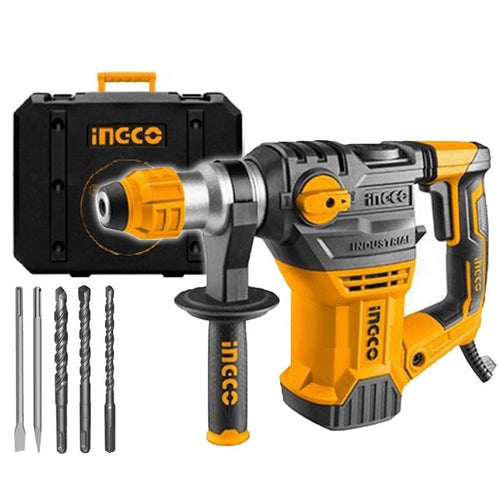
Perforator (also perforator or impact drill)
A perforator is an electric tool designed for drilling hard materials - concrete, stone, brick - with a powerful impact action . A perforator is often referred to as a "perforator" in everyday speech. Although it visually resembles a large drill, a perforator has a much more powerful impact mechanism, and some models have a hammer (impact) mode as well as an impact (hammer, no drill) mode.
This tool is indispensable in construction and renovation, where cutting holes in concrete walls, inserting rebar, installing electrical wiring, and other similar tasks are common.
Types of perforators
Rotary hammers differ in engine placement (horizontal vs. vertical), type of arrangement (so-called SDS-Plus and SDS-Max systems for attaching drill heads), and power class .
SDS-Plus type perforators are compact and have hole diameters mainly in the range of 4-26 mm, which is ideal for household and light professional needs.
SDS-Max hammer drills are more massive devices, supporting drill bits with a diameter of 18-40 mm - they are used for heavy work where large and deep holes are required.

There are also cordless perforators , although in Georgia, mains-powered models still predominate, as cordless ones are quite expensive when it comes to achieving high power and their need is less where a power source is available.
To help you understand the difference between wired and wireless models, we think this diagram will be helpful:

Who benefits from it?
-
Amateur craftsman - at home, a perforator is rarely needed by anyone, unless you only occasionally drill something into the wall - in such cases, an impact drill will come in handy. Otherwise, a small SDS-Plus perforator will save you time and effort at home. Models intended for amateurs are not too expensive : for 200-400 GEL, you can buy an 800-900 watt perforator, equipped with 3 modes (drilling, drilling + impact, impact). Such a tool, with proper use, will last you a long time in household conditions.
-
Professional craftsmen - electricians, plastic window installers, air conditioner installers and many other professions use a perforator every day. This category needs a reliable, above-average power (with an impact energy of 5-8 joules) perforator, which can make hundreds of holes a week without interruption. SDS-Plus models weighing 2-3 kg from DeWalt , Makita, Bosch (for example, Bosch GBH 2-26 DFR, Makita HR2470 and their updated versions) are the best in this category, as they have an optimal power/weight/durability ratio. Often they also come with a removable attachment head, which also functions as a conventional drill (if drilling in wood or metal is needed). Professionals appreciate such details as vibration compensation systems, hand protection against kickback and a long cord.
-
Construction/Industrial segment - for large construction sites and industrial sites, more powerful equipment is used. Here, the perforator is often replaced by an electric hammer (otherwise known as a “hammer”), which is basically a heavy SDS-Max perforator operating in impact mode. Such a device can weigh 5-10 kg and develop an impact energy of 10-20 joules, which can even destroy concrete walls, floors, and foundations. Cordless perforators are also often used in the industrial segment, especially in places where the power source is problematic (for example, teams working at height use 36-volt dual-battery models with built-in high-capacity batteries). However, such equipment is quite expensive and, as a rule, is only justified by the project budget.
We present a visualization comparing SDS Plus and SDS Max perforators:

Tips for buying a perforator
Choosing a hammer drill is easy on the one hand - you know you're drilling concrete and need enough power - but on the other hand, there are many factors to consider. Below are some of the key parameters and considerations:
-
Impact energy (joules) - this is the main indicator that distinguishes perforators. Small models have ~1.5-3 J of energy per blow, medium-class - 4-8 J, and large models - 10 J and above. The higher the joules, the easier and faster the drill will penetrate hard material. For example, a 2-3 joule tool will perfectly cope with drilling holes for screws in walls, while an 8 joule tool is already needed to remove large brackets for cornices or air conditioners.
-
Power (in watts) - At higher power (800-1200+ watts), the hammer drill will be able to work for a long time without overheating. However, you will also get a heavier tool. It is worth noting that high wattage does not always equal high impact energy - the efficiency of the motor also depends on the design, so be guided directly by the joule rating.
-
Modes and functions - it is better to choose a perforator with three modes : 1) drilling only (without impact), 2) drilling with impact, 3) impact only (like a hammer). This provides multifunctionality. Almost all modern models have this, but make sure. There is also a function for fixing the drill position, that is, you can fix the hammer tip in different positions in the drilling mode, which is convenient when you have to work not straight, but at an angle.
-
Vibration system - Strong impacts generate vibrations, which cause strain on the hands and back. High-end models have an active vibration control system (AVC), which reduces the strain on the hands by 50% or more. If you plan to work with a perforator for many hours a day, this feature is invaluable for your health.
-
SDS type and max. drill diameter - decide whether you need an SDS-Max perforator (if you often make holes >26mm in diameter). SDS-Plus is standard - their accessories (drills, wheels) are also cheaper and more affordable. Some models have a maximum diameter in a particular material (e.g. 24mm in concrete, 30mm in wood, 13mm in metal) indicated in the passport. Compare this data with your needs.
-
Weight and size - if accessibility is a problem (working on a ceiling or ladder), then you should choose a relatively light and compact model, even if it has a slightly lower joule capacity. A 2-3 kg perforator can be held with one hand if necessary, while 5 kg and heavier ones require a two-handed grip and firm stability.
In conclusion, the main issue when choosing a perforator is - for what work and with what intensity you will use it .
If you need to drill concrete occasionally, a mid-range model (e.g. 800-900 watts, 3 J impact energy) is definitely enough. However, if you are “buried in brick and concrete” all day, invest in a powerful model equipped with safety systems.
You can return to the table of contents or continue reading where it's time for welding and related tips.

Welding machine ("Svarka" inverter)
A welding machine, often referred to as a "swark" , is designed to weld metal using an electric arc. Modern, widely used models are mostly inverter-type swark machines - this is a relatively new technology that has replaced powerful transformers.
Their advantages are small size, light weight, and energy efficiency. For example, an inverter machine is easy to carry by hand when suspended, while the old type ("transformer") welding machine was very heavy and bulky.
Inverter vs. Transformer: Inverter spark plugs electronically convert current to a high frequency, allowing the device to produce the same power in a compact package.
As a result, a model that operates an electrode at 200 amps weighs just a few kilograms. In addition, they have an internal cooling system, which is located inside the device and is very convenient to use.
Inverters consume about 40% less electricity than standard older models. This has led to the fact that in the 2020s, practically all new Swarck devices are inverter-based, and transformer-based ones are rarely seen (only in specific heavy-duty industrial applications).
Types
There are several welding techniques and corresponding equipment:
-
MMA welding (electrode, “Manual Metal Arc”) - this is the classic “stick electrode” welding, where you manually place the electrode into the molten metal in the seam. Inverter welders mostly fall into this category. It is easy to use and is understood everywhere.
-
MIG/MAG (automatic wire feed, gas shielded) - This type of machine is sometimes called a "Kemppi machine" (Kemppi is the name of a popular Finnish brand of this equipment, which is generally used as a term, like Xerox or Botas). It uses wire that is automatically fed to the welding area. MIG/MAG machines are automatic and are often the choice of professional welders for a continuous and beautiful seam.
-
TIG welding - a technique for welding tin in an inert gas environment, which creates a very precise and clean seam (used for welding stainless steel and aluminum). Such machines have a special torch with a tungsten electrode, plus a separately supplied filler wire if necessary.
-
Multifunctional devices - there are models on the market that have several modes: MMA+MIG or MMA+TIG, or all three at once. Such “2-in-1” or “3-in-1” devices are convenient. For example, there are welders that also have a “camping function” - that is, you can connect a wire feeder and a gas cylinder at will, and the inverter will turn from a regular welder into a camp.
This visualization will help you compare welding techniques, where a comparison of MMA Vs MIG/MAG Vs TIG welding techniques is presented:

Who gives what?
-
Amateur craftsman - if you occasionally think about welding something at home, in a cottage or on a summer cottage (for example, repairing a fence, making a door grille), a small inverter welder is ideal for you. With models whose price is in the range of ~150-300 GEL, you will be able to weld various structures with electrodes with a diameter of 2.5-3.2 mm. Household devices, as a rule, have a limited recommended load time - for example, it is not advisable to weld more than 2-3 hours a day. Features that will make life easier for amateurs: “Hot Start” - a function that simplifies the heating of the electrode, and “Anti-Stick” - against the adhesion of the electrode, so that if it sticks to the metal being welded, the current is cut off and then it can be easily removed.
-
Professional welder - for a professional, high current amperage is important (which will weld large electrodes and thick metal). Here, the choice should be made on truly premium brands and more expensive models. It is also important that professional German Swarck machines have better cooling systems and higher efficiency (sometimes a duty cycle of 60-80%, which means that it can work continuously for 6-8 minutes out of 10 without overheating, compared to the standard 20-30% for amateurs).
-
Industrial/industrial use - in this case, the choice shifts to more specific devices: you may need semi-automatic MIG/MAG welding or continuous seams are required in production. Also, in heavy industry, for example, in pipelines, very powerful power sources up to 300-500 amperes are used. In Georgia, industrial facilities often resort to multifunctional inverters - some choose a device that, along with MMA, also has a TIG mode for high-purity welding. But it is worth noting that such multifunctional professional devices require more knowledge and skills from the operator. In industry, attention is also paid to the energy efficiency of the device - how much it saves electricity under high load. Inverter technology is also beneficial in this regard.
Recommendations for choosing an inverter inverter:
-
Welding current range (amps) - each device has a current regulator and min-max values. For example, 20-200 A. This determines which diameter of electrode it will use: as a rule, a 1 mm electrode requires ~30-40 amps. That is, for electrodes up to 3 mm, 120 A is enough, and 4 mm requires ~180 A. Most devices common in Georgia are up to 200 amps and can easily handle 4 mm electrodes. If you want to weld with 5 mm electrodes, make sure that the model provides at least 250-270 amps. Also, the higher the maximum, the longer the device can work even at a relatively low current without overheating.
-
Duty Cycle - Usually, the device is marked with a percentage, for example, 60%@160A - which means that when working at 160 amperes, it will work continuously for 6 minutes out of 10 and then it must cool down for 4 minutes. If you exceed this value, the thermal protection will turn off the device. In professional models, this figure is high (50-60%), while in amateur models it can be 20-30%. Check this parameter - if you have to weld for a long time, buy a model with a higher Duty Cycle.
-
Electrode size - As we said, the device has limitations. Check to see what diameter the manufacturer recommends for the electrode.
-
Cooling system - Make sure the device has a built-in cooling system (almost all inverters do). Some models also have “smart cooling” - it turns on as needed and does not work when the device is cold. This saves electricity and, at the same time, the device is less noisy.
-
Voltage tolerance - If you are working in a rural area or in an area where the power supply fluctuates, choose a device that has a wide voltage range (for example, the model indicates that it operates in the range of 160-250V). This will be important so that the power fluctuations do not burn the device or spoil the quality of the weld.
-
Quality of cables and accessories - Cheap models often come with relatively weak wire cables and clamps (minus the mass and electrode holder). You may have to replace them with better ones. High-end devices, on the other hand, provide a good, durable set. So, if you pay for it, make sure that the cables are thick and soft enough, the clamps are made of copper alloy and have strong grips, and if the clamp shield and wires come with it, it is an added bonus.
Choosing the right welding machine requires an analysis of your experience and needs. A simple rule of thumb is: start with a small inverter if you are a beginner - a machine with up to a 4-mm electrode will suffice for most amateur projects. A professional may have two machines - one portable MMA for small jobs and one semi-automatic (MIG/MAG) for larger and longer welds. The price of welding machines on the Georgian market by 2025 will range from 150-500 GEL, depending on the brand and power.
After discussing welding machines, you can return to the table of contents or continue reading about the also very interesting section, camps.

Kemp machine (MIG/MAG welding semi-automatic)
A "camping machine" is often called a semi-automatic welding machine in Georgia that performs wire welding (MIG/MAG) in an inert or active gas environment.
Kemp machines are used when working with thin metals , mostly for automobiles, sheet metal constructions, and any work where a beautiful, continuous, and strong seam is required.
Automatic and semi-automatic models
The category of Kemp machines includes both fully automatic machines (mostly industrial, programmable devices for large objects) and semi-automatic ones - these are standard, convenient machines in which the filler wire is fed automatically, and the movement is carried out manually by the welder. Semi-automatic machines require gas - usually CO₂ or an Ar/CO₂ mixture for steels, although there are flux-cored wires that work without gas (the wire itself has a flux inside, which releases a protective gas when melted). Some machines are “2 in 1” - they can perform both MMA welding with an electrode and work in MIG mode. Today, both separate Kemp machines and combined inverters with Kemp function are available in Georgia.
Relevance of use
In recent years, the demand for MIG machines has also increased in the DIY segment. This is partly due to the availability of online stores and the fact that manufacturers have released relatively small semi-automatic machines suitable for home use. For example, today you can buy a 200-250 ampere MIG machine that operates on a regular network (220V) and comes with a small 1-kg wire spool. Such a machine can cost up to 1,000 GEL, but it allows hobbyists and small workshops to obtain much more refined seams than they would have obtained with electrode welding.
Tips for choosing a MIG welding machine:
-
Professional vs. Amateur Series - Professional camping machines are more expensive, have more resources, and are designed for continuous operation. Amateur models will fully meet the requirements of periodic use at home or in a small workshop.
-
In terms of power - recently , single-phase (220V) machines have become popular. Previously, it was believed that single-phase MIG welding machines were weak and less useful, but modern inverters have dispelled this myth. Therefore, we also recommend that you take single-phase - the time when such models were considered useless is gone. Now even 220-volt semi-automatic machines are quite powerful for everyday tasks, and switching to 380V three-phase is no longer necessary, unless you are working with very thick metals.
-
2-in-1 combo machines - preferably a model that combines MMA and MIG together . This is about "buying two machines for the price of 1.5 machines" - you can weld both with wire and electrode with one device. Many models also come with ready-made MMA cables for switching to this mode. If, for example, you cannot use a gas cylinder in some situations (outdoor parking, in the wind), you can easily switch to the electrode. Many users prefer such hybrids.
-
Features required for professional models - An expensive device must have all the features that are standard:
-
Hot Start - Less relevant for MIG, more for MMA. However, some models have a "Spot welding timer" function, which is useful for intermittent welding.
-
Anti-stick system - that is, to prevent the electrode from sticking to the surface excessively, this is less of a problem in MIG.
-
Adaptive cooling - even good semi-automatics cool down normally, and the better the brand, the better the components inside the unit are positioned for cooling flow.
-
Ultimately, buying a MIG machine is a significant investment, although by 2025 the offered products will be constantly updated and the prices will be adjusted so that you can choose an option that is acceptable to you. In Georgia, the prices for such machines are quite high, but due to high demand, online stores are constantly updating their assortment and trying to offer the most acceptable price.
After we've finished reviewing the camps, you can return to the table of contents or continue the article and learn some very interesting tips about the jigsaw.

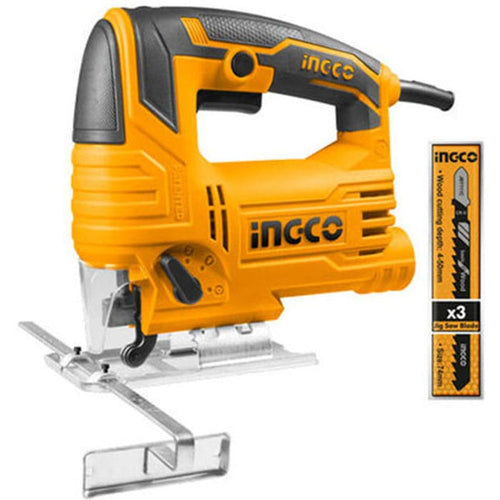
Jigsaw (reciprocating saw)
A jigsaw is an electric saw designed to make straight or curved cuts in various materials (wood, plastic, thin metal). It is particularly useful for making curved cuts that are impossible to make with a conventional circular saw.
A jigsaw is often called a "jog saw" because it has a thin, narrow saw blade that cuts through material with a rapid up-and-down motion.
A jigsaw is one of the most necessary and practical tools for both home craftsmen and professional carpenters - it is used to cut wooden parts into complex shapes, cut laminate into corners, and much more.
Construction and working principle
A standard hand jigsaw consists of a platform with a support below (where the tool rests on the work surface) and a handle above. Inside is an electric motor and a mechanism that converts the rotary motion into a linear up-and-down motion of the saw blade (the saw). Most modern jigsaws also have an orbital motion mechanism : the saw blade also adds a slight back-and-forth motion to the motion cycle, which increases the speed of the cut (although it slightly reduces the cleanliness of the seam).
There are also stationary jigsaws (jigsaw tables), where the tool itself is fixed and the material is moved.
Features when choosing a jigsaw
When buying a jigsaw, you need to know a few basic parameters:
-
Power and speed - these two are closely related. Power (in watts) determines how thick the material can be cut without stopping. With high power comes high cutting speed, but the price also increases. On average, household jigsaws are 400-700 watts, which will handle 5-10 cm of wood or 0.5-1 cm of metal. Speed is measured in revolutions per minute, although in the case of a jigsaw it is actually the number of movements of the saw blade per minute (1800-3000 movements / min is typical). It is better if the model has speed adjustment - many jigsaws allow you to pre-set or control the speed. Slow speeds are better for metal (so as not to overheat), fast - for wood.
-
Cutting depth - in different materials, a jigsaw has a maximum cutting depth. For example, a particular model can cut 80 mm in wood, 20 mm in aluminum, and 10 mm in steel. This data is specified by the manufacturer and is directly related to the power. Before buying, think about what thickness of material you usually cut and choose a jigsaw with the appropriate capabilities. Sometimes a model paradoxically cuts relatively deeply even with low power (depending on the quality of the mechanism), so double-check this figure.
-
Orbital and Bevel Angle - Almost all jigsaws can be tilted up to 45 degrees on either side, allowing you to make bevel cuts. If this angle is accurate and easy to set, it is a good advantage. Orbital adjustment is also desirable: it usually has 3-4 levels (0 - no orbital, clean cut; 3 - maximum orbit for fast but rough cuts).
-
Vacuum cleaner connection - Modern jigsaws have a grille for a vacuum cleaner hose. This is very helpful, as a jigsaw produces a lot of sawdust and shavings when cutting. Connecting to a vacuum cleaner will also make the cut line more visible and keep the work area clean.
-
Airflow blower function - Some models have an integrated airflow blower that automatically blows sawdust away from the cutting line so you can always see your target. This feature is mostly found on premium models, but it is very convenient to have when working with heavy loads.
-
Speed regulation - as we have already mentioned, it is important for mid-range and high-end jigsaws. Cheap jigsaws may operate at a constant speed, but most still control the speed. Electronic stabilization is also desirable - so that the speed does not drop dramatically under different loads.
-
Weight and size - Most hand jigsaws weigh between 2-3 kg. Lighter ones (1.5-1.8 kg) are easier to handle.
-
Saw blade clamping system - Modern jigsaws use standard T-shaped ("Bosch-type") saw blades that easily fit into the chuck (older models also had U-shaped ones). It is also important how easy it is to change the blade - it is better if this is done with a single lever so that you do not need tools to change the blade while working.
-
Additional features - Some models have a laser ruler that shows you the cutting line with a laser - this is a visual aid for straight cuts, but after experience you will need to use it less often. It would also be nice if it came with a support foot for parallel cuts, which is useful when slicing.
Brands available on the Georgian market
The jigsaw category includes both world-leading brands ( Bosch , Makita, DeWalt , Metabo), mid-range (Ryobi, Black&Decker, Stanley, Total) and budget brands (you might see Crown, Ferm, etc.). Bosch's "blue" (professional) and "green" (household) series are both popular - the green series is cheap and for hobbyists, the blue - expensive, but durable. Makita jigsaws are known for their stable quality and accuracy. DeWalt, on the other hand, is ahead in power, where the emphasis is on fast cutting. It's nice for the consumer to have so much choice, but on the other hand it can be confusing - so the main question is: "What do you want to do with a jigsaw?" .
For whom is the jigsaw useful?
-
Amateur craftsman and author of DIY projects - a jigsaw is one of the first power tools that a person interested in crafts acquires. Its versatility allows you to work on a variety of materials. For a home user, a 500-600 watt, 65-70 mm cutting depth jigsaw is quite enough. It is also very cheap - the most affordable models cost ~60-80 GEL (low-budget "rifle" type jigsaws), while a mid-quality branded model is within 150-250 GEL. Practically, any amateur jigsaw on the market is ideal for a home user. The main thing is to choose the right blades: for wood - coarse-toothed, for clean cuts - fine-toothed, for metal - a special metal blade.
-
Professional carpenter/builder - Professionals will need a jigsaw that can handle a variety of tasks on a daily basis and won't lose accuracy over time. They'll opt for more robust designs: a metal platform (a solid base that won't warp over time), a powerful motor (700+ watts to avoid burning out when working in thick material), and precise control (quick stop function, vibration dampening mechanism). Bosch's GST series or Makita's JV series fall into this category - they're great for long-term, heavy-duty use, and are suitable for commercial use.
-
Industrial/Special Purpose Use - In industries where hundreds of cuts are made every day, the hand jigsaw may be replaced by more specialized machines (e.g., CNC laser or plate cutters). However, the jigsaw still has a place in industry - for example, on construction sites where complex cuts are required.

Practical tips to consider when buying a jigsaw
Once you have understood the basic parameters and requirements, summarize and ask yourself a few questions:
-
What material are you going to work with? - If you plan to cut mainly wood, almost any jigsaw will do. If you plan to cut metal as well - make sure your model is powerful enough and has the right blades. The thicker and stronger the material, the more powerful the jigsaw you will need.
-
How much work do you need it for? - If you only need it for a few hobby projects (a few times a month), consider the speed of delivery and the volume of the dust box - hobby models have a small box, need to be emptied often. If you make long cuts often, appreciate models with a large platform and stability.
-
Will you use it professionally or as a one-time use? - A quality jigsaw is usually needed by a professional for commercial work, although such models are expensive. For amateur use, any of the ones on iSurve will do, as we have already mentioned. This is where the brand comes into play: the more famous and prestigious the manufacturer, the higher the quality.
-
Brand and originality - Always make sure you are buying an original model. All jigsaws on the site are original and genuine products of the specified brand.
A jigsaw is one of the most affordable tools for consumers on the Georgian market - its price is often surprisingly low (cheap models cost ~65 GEL).
The price of expensive ones can reach 300 GEL for professional models. As for installments, they usually apply to models above 90 GEL, although in the case of a jigsaw, many users prefer to buy outright, as it is so affordable.
In short, with the right jigsaw, you will be able to quickly and accurately make any figured or straight cut on wood, MDF, laminate, or even thin metal.
After reviewing jigsaws, you still have 2 options: you can return to the table of contents or continue reading about milling cutters.

Milling cutter (electric router)
"Milling" in carpentry terminology means an electric cutting-cutting machine used for cutting profiles, grooves, chamfers, and shaped cuts on wood, plastic, or metal surfaces.
Simply put, this is a router. This is a hand-held electric router that can create a groove or ornament of the desired geometric shape on a piece of wood. The router is equipped with a powerful motor and a rotating cutting head, behind which a multi-blade cutter is attached. With its help, for example, a beautiful profile of the edge of furniture is made, a lock groove in a wooden door frame, cutting out letters and symbols on a board, etc.
Tips for choosing - Focus on functionality: Before purchasing a router, you should first answer the question - "What am I going to do with the router?" This will help you determine what features you need. There are different types of routers based on geometry, for example:
-
Cylindrical milling - This involves making a groove or profile on a surface with a straight cylindrical cutter.
-
Torsion milling cutter - with a cutting end, for example, for making recessed holes or cavities.
-
Disc cutter - cuts sideways with a disc-shaped cutter (similar to a jigsaw).
-
Conical cutter - creates inclined profiles.
-
Spiral cutter - the cutting edges are arranged in a spiral, sometimes for a better cutting surface.
Milling cutters are also distinguished by material :
-
Wood milling cutters (most common);
-
Metal cutters (it must be specified that they are intended for hard materials);
-
Specially for stainless steel;
-
For aluminum;
-
For graphite and others.
In fact, all this is not a characteristic of the machine itself, but of the router itself. A hand-held router is the same machine, into which you insert a cutter (milling cutter) of various profiles, depending on the shape or material you have to work with. That is why the main characteristics of a router (machine) are:
-
Milling depth - the maximum depth that the tool can cut into the material. Quality routers have a depth ring, etc., to set the depth precisely. For example, a depth of up to 55 mm is typical for routers with a standard 8 mm collet.
-
Rotational speed - Routers operate at high speeds (in the 20,000 - 30,000 rpm range). The higher the speed, the cleaner the cutting edge will be, but the higher the speed, the more material is cut and sometimes the tool becomes harder to control. Most models have a speed control to help you select the optimal speed for different diameters of milling.
-
Motor power - Like a planer, a hand-held router's power ranges from 1000-1800 watts. More power can handle larger diameter router bits and makes it easier to work with harder materials. However, more power means a heavier and larger tool. For example, a 1200-watt router will cut an ornament on the edge of solid oak, while a 710-watt one may have to do the same slowly.
-
Maximum cutter diameter - determines what diameter cutting disc/cutter can be inserted. Small routers are limited to cutters with a diameter of 30-40 mm, large ones - 50-60 mm and more. This is important if you plan to cut a large profile, for example, on a thick panel.
-
Noise level - Powerful routers are quite noisy (90+ dB). Good models produce relatively less noise due to the asynchronous motor or better balancing of the shaft.
-
A vacuum cleaner connection is essential, as milling creates a lot of sawdust and dust. Most tools have this.
-
Speed regulation and stabilization - good models allow you to adjust all of these data (in the range of 10,000-30,000 rpm). Also very important is electronic stabilization - so that when the load changes (for example, a denser area is encountered) the speed does not drop dramatically, but the device automatically increases the power delivered to maintain speed. Exceptionally good routers have such smart control, which improves the quality of the cut.
-
Additional features - Soft Start is a big plus - the tool does not "swivel" sharply when turned on and you can hold it securely. Also, the illuminated base is a necessary feature, which illuminates the cutting line.
Brands and quality
The router category is dominated by well-known brands: Bosch (blue series - GOF models ), Makita (RP and RT series), DeWalt , Hitachi/Hikoki , and for the more budget-friendly segment - Total , Crown , Stanley , etc. Bosch and DeWalt products are world leaders in quality, along with full warranty service. Makita also has the same reputation. The difference is in price - European and Japanese tools cost more, but often pay for themselves in the long run. Crown and Total routers are inexpensive and do basic work well, although they may not have the precise clamping and adjustment capabilities needed for complex ornamental cuts.
What does it give to whom?
-
Amateur carpenter/craftsman - If you have wooden doors and windows in your home or have to repair furniture, a hand-held router will open up new possibilities for you. It is easy to make beautiful decorative edges on shelves, cut out inserts for locks or joints. For an amateur, a medium-sized model up to 1000 watts is usually enough. Budget models (Total, Ingco) will work fine if you do not have very high-precision work.
-
Professional carpenters - furniture makers, window and door masters and other professional craftsmen have such a job that the router plays a crucial role. They often own several different routers: one large, high-power - for deep grooves and massive details, and one more miniature - for corners and edges. Such a combination increases flexibility. For professionals, it is better to choose models from high-quality brands (Bosch, Makita, DeWalt and others), which have greater accuracy, stable rotation and durable construction.
Industrial segment - hand routers are less commonly used in large enterprises - their work is mainly done by ceramic and CNC machines that process wood in bulk. However, sometimes in industrial environments there is a need to manually cut out a specific profile or make adjustments on the spot, which cannot be solved without a powerful hand router.
In such cases, the most powerful and durable model is preferred - for example, a 1800+ watt router. Such a tool is already considered a semi-machine and is often mounted on a stand (router table) to facilitate large jobs.
However, it is worth noting that the use of a handheld router in industry is limited - for high repeatability, CNC machines and stationary radius milling machines are better.

A brief summary of choosing an electric router
Consider the following key points:
-
Milling depth and diameter: Determine the maximum groove depth and cutter diameter you will need - if you are working on large shapes, choose a model that goes ~55-60 mm deep and has a 1/2'' (12 mm) collet so you can use large cutters.
-
Power and speed: 900-1200 W is enough for an amateur, 1400+ W is desirable for a professional. Make sure that the tool has speed regulation (5-6 steps or electronic control) and load stabilization - this will significantly improve the quality of the cut.
-
Ergonomics: Large two-handed routers are heavy (~4-5 kg), but stable. If you mainly do thin profiles, you can also get a small "trimmer" - you can hold it in one hand and it weighs less (~1.5-2 kg). Often professionals own both for the same tasks.
-
Vacuum cleaner and lighting: It's best if the model has a dust collector or brushes that sweep the sawdust to the side while cutting - so you can see the cutting line. LED lighting is also a good addition when cutting profiles in the dark.
Conclusion
As we have seen, the right choice of power tools depends on many factors - primarily on the user's needs and experience level , as well as on the technical characteristics and quality of each tool.
By 2025, the Georgian market will be saturated with products from both world-leading brands and affordable, new manufacturers. This means that almost any buyer with any budget and needs can find a model that suits them. The main task is to make an informed choice based on real data, and not just advertising and price.
In summary, here are some basic principles that will help you when selecting any tool:
-
Assess your needs and frequency of use : A hobbyist is often better off with a simpler, cheaper model that is sufficient for occasional use, while a professional needs power and durability, which can be more expensive. Therefore, consider how intensively you will use the tool and what demands it will have (flexible hobby or heavy daily routine).
-
Find out what features are critical : Each category has several key specifications (power, speed, capacity, size, features, etc.) that you should focus on. For example, in the case of a drill - impact function, Newtons of torque; in the case of a saw - blade diameter, speed regulator; in the case of a welding machine - amperage, etc. Compare these data from different models and make sure that a particular model has the crucial indicators for you at a satisfactory level.
-
Pay attention to ergonomics and safety : The tool may have the best parameters, but if it does not fit well in your hand or causes discomfort during operation, it will be difficult to work with it and may even cause injury. Therefore, it is important to check the weight, handle elements, convenience of the power button, vibration level, etc. Also, safety features (protective covers, locks, overheating protection) should be considered so that you feel as safe as possible while working.
-
Learn about real customer experiences : Try to study reviews and ratings about the models you are interested in. On the Internet (for example, on the product page of the Isuruve website), others often express their impressions - what are the advantages and disadvantages of the model. Such feedback can help you learn about details that are not mentioned in advertising (for example, “This drill gets a little hot when working for a long time” or “This saw lacks power in curves when sharpening the saw blade”). Customer experience is invaluable for making an informed choice.
-
Price and quality balance : Try to find a balance - there is no need for an expensive professional series tool if you can't use even half of its capabilities, but buying a cheap, poorly made model can cost you more in the long run (through replacement or repair). Often there are mid-range brands on the market that offer quite good quality at a reasonable price. For example, Crown, Total, Ingco, Stanley - their products are not inferior to professional ones in terms of usability and cost much less.
Ultimately, the right power tool will not only protect your investment, but will also make your work easier, save you time, and improve the quality of your work .
For each of the tools discussed above, make sure to consider both the technical and practical aspects when choosing. Follow safety rules when working - it's best to buy good protective equipment along with the tools.
Finally, take advantage of the many resources available today to help you make a decision: consulting with experts, online articles (like this one), user comments, and detailed descriptions.
We hope that our focus on user education, which accompanied this post, will ultimately ensure that you get exactly the right tool to do the right job at the right time - safely, efficiently, and reliably.
Popular models


 კომერციული გარანტია 1 წელი



შესაძლოა დაგაინტერესოთ
-
How to choose a fan?
As soon as summer arrives, the first thing that comes to mind is a fan . Fresh air circulation in the heat, rapid coo...
-

How to choose a robot vacuum cleaner?
The question of how to choose a robot vacuum cleaner has been relevant since the appearance of these smart devices on...
-
How to set the refrigerator temperature?
Setting the refrigerator temperature correctly is essential to ensure that products retain their nutritional value fo...
-
Air conditioner for 40 square meters - everything you need to know before buying
There are several important factors to consider when selecting the right air conditioner for a 40 m² room in 2025, en...
-

Intex or Bestway - which pool to choose?
When shopping for an outdoor framed pool, you've probably come across Bestway and Intex pools. Both brands offer a wi...
-
Overview of air conditioner features - what each one means
A modern air conditioner has many features, some of which are easy to guess by their names, but in advertising campai...
-
The most comprehensive review of DELONGHI coffee machines
DeLonghi is an Italian premium brand known for its high-quality home appliances, especially coffee machines . The com...
-

Lawn Mowers - Overview of All Brands on the Georgian Market
Lawn mowers are one of the most sought-after tools on the Georgian market and are an integral part of yard and garde...
