
Pulverizer selection criteria and model review
Pulverizers, whose traditional function is to apply paint, can be used not only for painting surfaces, but also for painting metals or walls, as well as for applying varnishes and anti-corrosion materials.
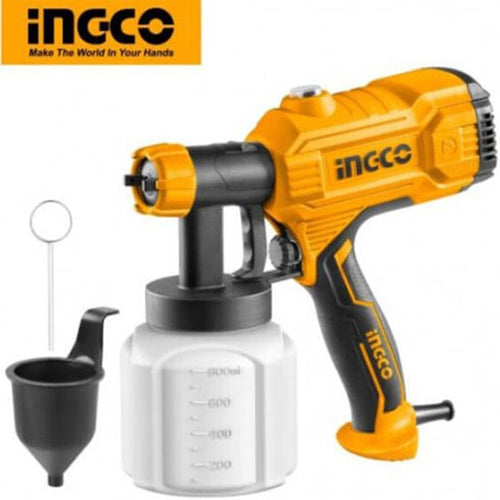
Regardless of the spraying method, sprayers have a similar design. They are equipped with an electric motor, a paint container, a nozzle and a control handle, and painting is carried out using a built-in pressure pump.
Sometimes a sprayer can be used in non-standard places . For example, to spray water on plants, to clean old wallpaper from walls, etc.
Keep in mind that the power of the device affects the efficiency of work:
- Models with a power rating of 60 to 200 W are used for small household tasks. This type of sprayer can be used to paint furniture, decorative items, or small surfaces;
- 500-600 W power is suitable for larger-scale work (painting walls, ceilings, fences);
- At 600-1000 watts, it is already possible to process building facades or car surfaces.
- Another important parameter is productivity, which refers to the amount of paint that the device sprays in 1 minute. For household work, 0.5 l/min is sufficient. For easy painting of a wall or fence, the device should have a flow rate of 1-2 liters per minute.
- The volume of a pulverizer tank usually ranges between 0.5-1.5 liters - the larger this figure, the longer you can work, but it should also be remembered that a too large tank significantly weighs down the tool.
- The size of the nozzle depends on the quality of the material being sprayed. When using water-based paint and other base materials, a minimum diameter of 0.5-1.3 mm is sufficient. For acrylic paints and varnishes, a diameter of up to 1.6 mm is suitable, and for liquid fillers (the same as putty) a diameter of 1.6-2.8 mm is suitable.
- Other features that you should pay attention to during the buying process are: vibration level, manufacturing material, and the presence of additional components.
Bosch PFS 3000-2
The model has a powerful 650 W motor with two-stage regulation. To improve color, AllPaint technology ensures individual processing of different materials.

The kit includes a shoulder strap, separate nozzles for water-based paint, and a color filter. Thanks to the SDS system, the tank is quickly filled with paint and easy to clean.
Advantages:
- Long-term work;
- Powerful engine;
- Long hose;
- Adjustable nozzles;
- Convenience in the work process.
Disadvantages:
- High paint consumption;
- High price.
Wagner W100 2361507 - Versatile and compact pulverizer
The Wagner electric spray gun features an ergonomic design and a long service life . Additional comfort during operation is provided by a relief handle, a paint supply regulator and the small dimensions of the device.

The equipment has a power of 280 W, and the large nozzle diameter (2.5 mm) allows the Wagner W100 to be used for working with paints of different densities and textures.
Advantages:
- Diversity;
- Light weight;
- Wide nozzles;
- Convenience in the work process.
Disadvantages:
- Weak performance.
Ryobi SSP100 - the most economical pulverizer
Ryobi attracts users with its ease of use and the ability to save paint. The capacious tank is designed for one liter of paint and is equipped with a quick-lock system that protects it from excessive liquid spillage.

A long power cord, cleaning kit, measuring cup and dispenser make the sprayer easy to use. The tool's paint consumption is 4 m²/min, which guarantees fast and efficient painting.
Advantages:
- Convenience in the work process;
- Economical;
- High level of performance;
- Rich technology.
Disadvantages:
- Noisy work.
Popular models

 კომერციული გარანტია 1 წელი



შესაძლოა დაგაინტერესოთ
-
How to choose a fan?
As soon as summer arrives, the first thing that comes to mind is a fan . Fresh air circulation in the heat, rapid coo...
-
How to choose power tools in 2025?
Modern construction and repair work is unthinkable without quality power tools. Choosing the right tool is essential ...
-
How to choose a robot vacuum cleaner?
The question of how to choose a robot vacuum cleaner has been relevant since the appearance of these smart devices on...
-
How to set the refrigerator temperature?
Setting the refrigerator temperature correctly is essential to ensure that products retain their nutritional value fo...
-
Air conditioner for 40 square meters - everything you need to know before buying
There are several important factors to consider when selecting the right air conditioner for a 40 m² room in 2025, en...
-
Intex or Bestway - which pool to choose?
When shopping for an outdoor framed pool, you've probably come across Bestway and Intex pools. Both brands offer a wi...
-
Overview of air conditioner features - what each one means
A modern air conditioner has many features, some of which are easy to guess by their names, but in advertising campai...
-
The most comprehensive review of DELONGHI coffee machines
DeLonghi is an Italian premium brand known for its high-quality home appliances, especially coffee machines . The com...
