
Overview of drills with and without impact function
When buying drills, there are several important factors to consider, such as:
Motor power - For a conventional drill, only 500 watts is enough. If you use the device to work on wood, it may have less power. If you need to drill metal, 500 watts will not be enough. Impact drills are more efficient and their power is above 700 watts.
Gearbox RPM - This number affects the operating speed. High -quality drills and impact drills should reach 3,000 RPM.

For mixers, this indicator may not be very important - only 600 rpm. You should buy a screwdriver with a speed switching function. The first of them should be rated at 400 rpm, the last at 1500 rpm. If the drill does not have a speed switching function, it is better to give preference to a device with a rotation speed of about 700 per minute.
Weight of the device - If you need drills for long-term and regular use, you should choose devices with low weight. Thus, the load on the craftsman will be significantly reduced.
If you will use the device infrequently, experts recommend purchasing heavier, but cheaper drills. As a rule, the mass of conventional devices, impact drills and screwdrivers ranges from 1.2-1.7 kg. In turn, mixers vary in weight by 2.7-3 kg.

Additional control capabilities - experts advise paying attention to the ability to adjust the rotation speed. Some models differ from each other in the function of changing parameters.
Power source - There are a large number of cordless drills and corded models on the market. The main disadvantage of the former is the need to periodically charge the battery. The disadvantage of network-powered devices is that you cannot use them over long distances. The price of cordless drills is slightly higher than that of corded ones.

Drills for different purposes
Depending on what functions the drill has, the following main types of tools are distinguished:
- Ordinary drill;
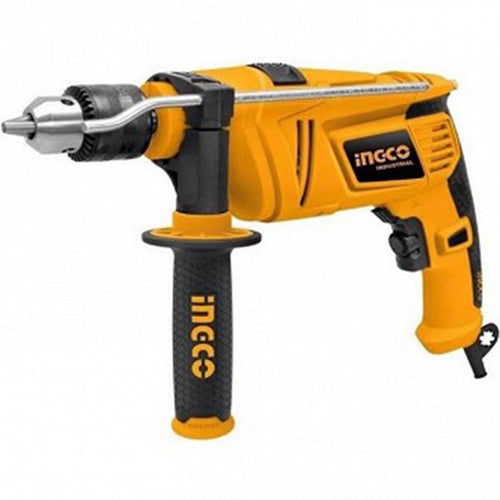
- Impact drill;
- Drill screwdrivers;
- Drill mixers.
All of these models differ greatly in both functionality and price. Therefore, when buying, it is very important to understand the purpose of using the tool.
Ordinary drills
Such a drill does not have an impact function, so it will only be possible to drill into wood, drywall, metal, and other not very hard surfaces. This tool is intended for small repair work.
Impact drills
Impact drills are needed for those who plan to drill into concrete, brick, stone, and other hard materials. Such a tool is more expensive than a regular drill, but it has certain limitations. Such a drill will not be able to work with dense materials all the time, as it will quickly fail. If you regularly have to work with dense materials, then it is better to use a perforator .
Popular models

 კომერციული გარანტია 1 წელი


შესაძლოა დაგაინტერესოთ
-
How to choose a fan?
As soon as summer arrives, the first thing that comes to mind is a fan . Fresh air circulation in the heat, rapid coo...
-
How to choose power tools in 2025?
Modern construction and repair work is unthinkable without quality power tools. Choosing the right tool is essential ...
-

How to choose a robot vacuum cleaner?
The question of how to choose a robot vacuum cleaner has been relevant since the appearance of these smart devices on...
-
How to set the refrigerator temperature?
Setting the refrigerator temperature correctly is essential to ensure that products retain their nutritional value fo...
-

Air conditioner for 40 square meters - everything you need to know before buying
There are several important factors to consider when selecting the right air conditioner for a 40 m² room in 2025, en...
-

Intex or Bestway - which pool to choose?
When shopping for an outdoor framed pool, you've probably come across Bestway and Intex pools. Both brands offer a wi...
-

Overview of air conditioner features - what each one means
A modern air conditioner has many features, some of which are easy to guess by their names, but in advertising campai...
-
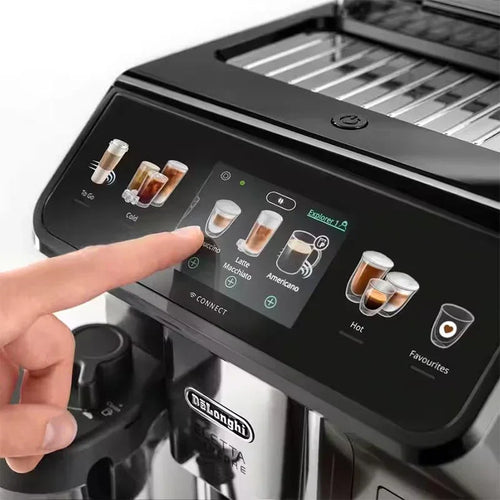
The most comprehensive review of DELONGHI coffee machines
DeLonghi is an Italian premium brand known for its high-quality home appliances, especially coffee machines . The com...
