
Main technical characteristics of fans
Fans are devices used for air circulation and cooling.
There are different types of fans, including desk, floor, ceiling, and portable fans.
Its main function is to move air around the room, but some models have additional features, such as speed control and remote control.
Fans are used in homes, offices, industries, and other spaces to control air circulation and temperature.

Fans are usually more energy efficient than air conditioners.
It is important to use fans safely, especially around children and pets.
The main technical characteristics of the fans include:
- Airflow rate: Measured in cubic feet per minute (CFM) or cubic meters per hour (m³/h). This shows how much air the fan moves.
- Power: Measured in watts (W). Typically, household fans range from 10 to 100 watts.
- Rotation speed: Measured in revolutions per minute (RPM). Higher RPM means faster rotation and usually stronger airflow.
- Number and size of blades: The number of blades (usually 3 to 5) and diameter affect efficiency.
- Noise level: Measured in decibels (dB). Household fans are typically in the 50-60 dB range.

- Oscillation angle: Some fans can pivot at a certain angle, usually 60-90 degrees.
- Speed adjustment: Many fans have several speed levels (often 3).
- Remote control: Some models have a remote control function
- Timer: Many modern fans have a timer function for automatic shut-off.
- Energy efficiency rating: In some countries, fans are given an energy efficiency rating.
- IP Rating: Fans intended for outdoor use have an IP (Ingress Protection) rating, which indicates their resistance to water and dust.
These characteristics vary depending on the type and model of fan.
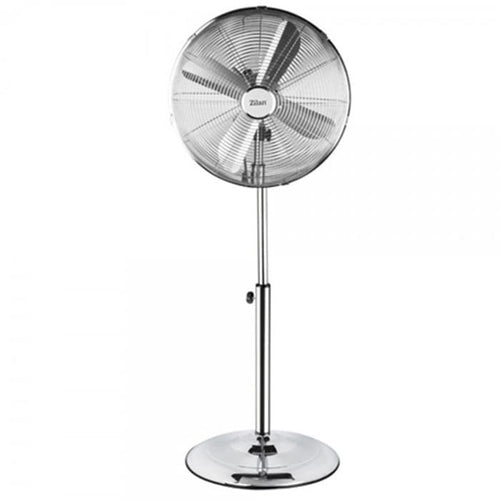
Popular models

 კომერციული გარანტია 1 წელი


შესაძლოა დაგაინტერესოთ
-
How to choose a fan?
As soon as summer arrives, the first thing that comes to mind is a fan . Fresh air circulation in the heat, rapid coo...
-
How to choose power tools in 2025?
Modern construction and repair work is unthinkable without quality power tools. Choosing the right tool is essential ...
-
How to choose a robot vacuum cleaner?
The question of how to choose a robot vacuum cleaner has been relevant since the appearance of these smart devices on...
-
How to set the refrigerator temperature?
Setting the refrigerator temperature correctly is essential to ensure that products retain their nutritional value fo...
-
Air conditioner for 40 square meters - everything you need to know before buying
There are several important factors to consider when selecting the right air conditioner for a 40 m² room in 2025, en...
-

Intex or Bestway - which pool to choose?
When shopping for an outdoor framed pool, you've probably come across Bestway and Intex pools. Both brands offer a wi...
-
Overview of air conditioner features - what each one means
A modern air conditioner has many features, some of which are easy to guess by their names, but in advertising campai...
-
The most comprehensive review of DELONGHI coffee machines
DeLonghi is an Italian premium brand known for its high-quality home appliances, especially coffee machines . The com...
